A Southward Tide

Poems, essays and excerpts. A favorite quote or two. An observation. A compendium of imagery. A dream analysis.

Tag: Literature

A Solitary Thing

At first,
it was foreign.

The better part of a year
it took to become part of us

and we became accustomed.

We plotted:
what medications
to bring to the bedside,
what broth,
what puree.

We measured:
steps down the hall,
sunlight,
temperature.

We found a fragile balance
in this no man’s land

and while it slipped into
the clicks and clangs,
we rested in the forgetting.

But eventually it became more than us;

more than our imagined credentials,
more than the pats and hurrahs
we gave ourselves,

more than the sympathy we were
bestowed for fighting a battle
not our own.

It became foreign again.

And we lamented the years
spent forgetting
and getting on with things.

Though the system kept running,
the broths and purees,
the tray with its colored days,
the blankets and slippers,

we took to whispered tones.

It was no longer ours,
but his alone –

a strange solitary thing.

Labyrinthine Way

I must have had a thousand feet to walk
your hollow lanes, like licks of fire that stalk
the harvest hay. Through your maze I beat wings
like moth to the flame. City of past things
too narrow to name, city of avenues
too wide to cross, city of endless queues:
I left your ant farm with its bird’s eye view.
I left the old block. I long walked my due.
Streets swept anew past the seconds I fled
cause time swallows fast, fresh feet tread my stead.
Farewell far city of brick memory,
my soles still imprinted with your fiery
mark. Upon cobbled stone, I’ll rest my feet
and watch as the masses flock to the heat.
Now in vaulted hall I stake the last stay –
lead others down your labyrinthine way.

The Polyphemus Moth and other important moments in literature

Every now and again, a book tattoos itself on my life. I  hark back to the first time I read Balthazar by Lawrence Durrell or Rider Haggard, Richard Brautigan, Notes from the UndergroundLady Chatterly’s Lover, Hernandez’ Piano Stories or The Master and Margarita. I filled journals with quotes. I thought, life will never be the same now that I know what literature has made possible, my perceptions shaded by the disclosures of fictional worlds. I recall the year, the mood, the mundane dramas of the period when I read such work, when Marquez murdered his protagonist, Santiago Nasar, in the first line of his novel or when Annie Dillard’s polyphemus moth began its infinite crawl down a winter drive.

I read Pilgrim at Tinker Creek in high school. A decade later, I remember two passages from her non-fiction account. In one instance, Dillard describes the histories of newly sighted patients, blind from birth, after the development of safe cataract operations – their wonder and confusion at the two-dimensional plane of color patches and textures where space, form and size are indistinguishable. Their perception seems akin to an acid trip. A twenty-two year old girl keeps her eyes shuts for two weeks. When she finally opens them, she “repeatedly exlaimed: ‘Oh God! How beautiful.'”

And then the next passage: the moth, the fateful cocoon brought prematurely to life by the hot hands of school children, born in a mason jar, its wings forever crumpled. Upon her memory is etched the image of the beautiful crippled moth hobbling towards its death down a cold long driveway. I still cry when I read those pages. It has been seared on my subconscious too. It pains me that she did not spare us her morbid image. I have my own horrors tucked away too – the corpse of the baby sparrow we snatched after its nest fell, despite my mother’s insistence that if we touched it its mama would never return, the beautiful subsaharan tortoise I named Henry dead on our hot Manhattan roof. All these things brought back to life by the polyphemus moth, our hearts burned by the same sad destiny.

A Jaded Moon

Since my last post was about Lawrence Durrell, one thought led to another and I found myself rereading The Colossus of Maroussi by Henry Miller. Miller, like Durrell and his zoologist brother Gerald, form the trifecta of my Greek obsession, always hinging on my unquenched desire to spend a summer writing in Corfu. At some point in the book, Miller is wandering through Crete, an island I visited out of college with my then boyfriend.

That summer, I was obsessed with the sanctity of our travels, wanting only the authentic experience and to be waterlogged with big feelings about the universe, the world and the future of all things. My boyfriend, on the other hand, had developed an acute allergy to sunblock. Unfortunately we decided that it was the bright Mediterranean sun responsible for turning his face into a shiny red plane. We kept piling on the SPF. Every time I looked at his taut tomato face, I felt a bubble of anger rising in me. His face was ruining my quest across ancient lands.

Miller too was often obsessed with dissecting locations down to their emotional skeletons. Big Sur. Paris. New York. Here Crete. Of course, he blows the roof off his descriptions. A few phrases stick out:

“Again I had that feeling of the back pages of Dicken’s novels, of a quaint one-legged world illumined by a jaded moon: a land that had survived every catastrophe and was now palpitating with a blood beat, a land of owls and herons and crazy relics such as sailors bring back from foreign shores.”

I too had walked Knossos and Phaestos with cautious steps, hoping to feel fifty centuries of civilization under foot. I wanted a connection with that part of us that mistakes history for eternity. I’m just not sure I was capable. Like a jaded moon.  

Miller goes on, “The island was once studded with citadels, the gleaming hub of a wheel whose splendor cast its shadow over the whole known world…. The last wheel has fallen apart, the vertical life is down with; man is spreading over the face of the earth in every direction like a fungus growth, blotting out the last gleams of light ,the last hopes.”

And while Miller’s prose are voracious dictates about the end of civilization, which he sees everywhere, least of all though in his drunken debauches, I am drawn now to the concept of the jaded moon. Next blog: ennui. 21st C Gen X jadedness. Perhaps also my favorite theme: paralysis.
My Mother is an Extinct Bird

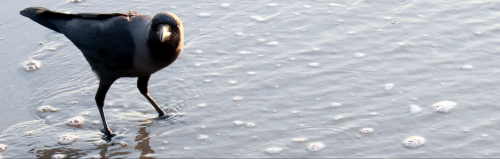
My mother is an extinct bird
sketched in children’s books,
surviving in imaginations
grand and small.

The old mantelpiece man
narrates this flight of auburn fiction,
his pipe alit by the tale’s wind.

How can I follow her
when she is a vellum-bound kite,
tracing pinpoint crescents across the sky?

A French Summer

The plane landed at Roissy onto a tarmac that mirrored the drab June sky. Always the day of her arrival was unseasonable weather. The French shook their heads and said the same thing “Ah! Ce temps.”  55 degrees and overcast with a ninety percent chance of rain, a hundred percent chance of gray. Summer by no standard.

France was its most insufferably French during the first hours spent escaping Charles de Gaulle airport: the interminable wait for the bags, the queue of dusty taxis to ship her off on highways flanked by concrete bunkers and sloppy graffiti. The scenic roads of France. Supermarkets housed in lego-blocks with chipper names like Conforama and Bricolorama, factories resembling Ikea versions of corrugated tin shanties, barely alive plants peaking above plastic coverings.  Further inland they drove, past the white-tiled tunnels with their overhead yellow-lit rectangles, past the wastelands of suburban brick flickering offside the highway barriers like images from a moving train. Resting her head against the taxi window, listening to the haggle on the radio, she felt acute disappointment. 

And the countryside did not seem quite right either. It was more crooked and wobbly than she remembered. They passed cigarette-stained towns with peeling shutters and windowsill doilies, old ladies in black orthopedics and knee-length skirts, mending handkerchiefs and knitting stiff wool. France had let weeds grow along her roads, in her gardens, up her trellis; the bristly stalks of unknown plants had taken over the clean corners. 

She was reminded of her grandmother and this made her more depressed. 

One Hundred Years Past

It was a long way she trod from
second one till a hundred past.

Paris bombed!
The wars did come and go.

From the windowsill, she sewed rag to rag
and watched them all. She tied her
things up in boxes stacked a century ago,
mended clothes pressed flat in a Norman cupboard.

She died in a modern hospital room
that resembled nothing the year she was born,
the early century – 1908.
She was just a child when all those boys died.

And then she bore her own in the second war.

Paris liberated!
Flags waved, firecrackers burned.

Years later, they fought.
My father left.

For decades, she was old.
We sat her at a table once a year
and smiled when she was gone.
She smelled like musty things.

How little we notice until they die,

then we try on their heavy shoes,
we unpack their boxes, flip
scalloped pictures, yellow and gray.

We touch their things as if
we knew how to cradle a hungry child
and yearn the taste of milk.

How little we build from souvenirs,
how little we cared to ask when
she sat old by the windowsill.

Life is long – but the same length for all,
the same second one till years gone past.
And the pain it takes to remember,
we soon forget.

She lived to a hundred and three,
and we shall soon forget.

The Ocean of Notions

I start with this question: is great writing a psychological or a spiritual exercise?

Why do so many writers eclipse themselves with mind-numbing substance? Is it to quiet the daily mind, to let go of the ego with its to-do lists and cannot’s and should have’s? Our mind is the world’s angriest prisoner, a recividist banging at the shell of our body, using us up foolishly. Great literature frees us from what we know or have known. Einstein says, “We can’t solve problems by using the same kind of thinking we used when we created them.” So it must come from elsewhere.

In Salman Rushdie’s first children’s book, Haroun travels to the earth’s second moon Khahani to restore his father’s storytelling tap, where fresh stories had once poured in from the Sea of Stories. The concept of the spring of knowledge, the ocean of meaning is archetypal.

“He looked into the water and saw that it was made up of a thousand thousand thousand and one different currents, each one a different colour, weaving in and out of one another like a liquid tapestry of breathtaking complexity; and Iff explained that these were the Streams of Story, that each coloured strand represented and contained a single tale.” (Haroun and the Sea of Stories, 1990)

So if our mind is a captive, how can we free ourselves and tap into the unknown, the creative well within?

Cell Wars

What fatal flaw built us to be simple skin operators,
blind to the underside of things?

No matter the state of the surface,
when the light turns, the body flips
an underground switch and a motley
opera of cells enact procedures.

As I lay in bed philosophizing death,
tiny proteins beat me to it.

– November 2011