A Southward Tide

Poems, essays and excerpts. A favorite quote or two. An observation. A compendium of imagery. A dream analysis.

Tag: History

A Jaded Moon

Since my last post was about Lawrence Durrell, one thought led to another and I found myself rereading The Colossus of Maroussi by Henry Miller. Miller, like Durrell and his zoologist brother Gerald, form the trifecta of my Greek obsession, always hinging on my unquenched desire to spend a summer writing in Corfu. At some point in the book, Miller is wandering through Crete, an island I visited out of college with my then boyfriend.

That summer, I was obsessed with the sanctity of our travels, wanting only the authentic experience and to be waterlogged with big feelings about the universe, the world and the future of all things. My boyfriend, on the other hand, had developed an acute allergy to sunblock. Unfortunately we decided that it was the bright Mediterranean sun responsible for turning his face into a shiny red plane. We kept piling on the SPF. Every time I looked at his taut tomato face, I felt a bubble of anger rising in me. His face was ruining my quest across ancient lands.

Miller too was often obsessed with dissecting locations down to their emotional skeletons. Big Sur. Paris. New York. Here Crete. Of course, he blows the roof off his descriptions. A few phrases stick out:

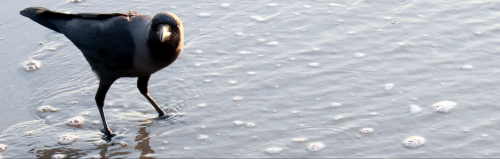
“Again I had that feeling of the back pages of Dicken’s novels, of a quaint one-legged world illumined by a jaded moon: a land that had survived every catastrophe and was now palpitating with a blood beat, a land of owls and herons and crazy relics such as sailors bring back from foreign shores.”

I too had walked Knossos and Phaestos with cautious steps, hoping to feel fifty centuries of civilization under foot. I wanted a connection with that part of us that mistakes history for eternity. I’m just not sure I was capable. Like a jaded moon.  

Miller goes on, “The island was once studded with citadels, the gleaming hub of a wheel whose splendor cast its shadow over the whole known world…. The last wheel has fallen apart, the vertical life is down with; man is spreading over the face of the earth in every direction like a fungus growth, blotting out the last gleams of light ,the last hopes.”

And while Miller’s prose are voracious dictates about the end of civilization, which he sees everywhere, least of all though in his drunken debauches, I am drawn now to the concept of the jaded moon. Next blog: ennui. 21st C Gen X jadedness. Perhaps also my favorite theme: paralysis.

A French Summer

The plane landed at Roissy onto a tarmac that mirrored the drab June sky. Always the day of her arrival was unseasonable weather. The French shook their heads and said the same thing “Ah! Ce temps.”  55 degrees and overcast with a ninety percent chance of rain, a hundred percent chance of gray. Summer by no standard.

France was its most insufferably French during the first hours spent escaping Charles de Gaulle airport: the interminable wait for the bags, the queue of dusty taxis to ship her off on highways flanked by concrete bunkers and sloppy graffiti. The scenic roads of France. Supermarkets housed in lego-blocks with chipper names like Conforama and Bricolorama, factories resembling Ikea versions of corrugated tin shanties, barely alive plants peaking above plastic coverings.  Further inland they drove, past the white-tiled tunnels with their overhead yellow-lit rectangles, past the wastelands of suburban brick flickering offside the highway barriers like images from a moving train. Resting her head against the taxi window, listening to the haggle on the radio, she felt acute disappointment. 

And the countryside did not seem quite right either. It was more crooked and wobbly than she remembered. They passed cigarette-stained towns with peeling shutters and windowsill doilies, old ladies in black orthopedics and knee-length skirts, mending handkerchiefs and knitting stiff wool. France had let weeds grow along her roads, in her gardens, up her trellis; the bristly stalks of unknown plants had taken over the clean corners. 

She was reminded of her grandmother and this made her more depressed. 

One Hundred Years Past

It was a long way she trod from
second one till a hundred past.

Paris bombed!
The wars did come and go.

From the windowsill, she sewed rag to rag
and watched them all. She tied her
things up in boxes stacked a century ago,
mended clothes pressed flat in a Norman cupboard.

She died in a modern hospital room
that resembled nothing the year she was born,
the early century – 1908.
She was just a child when all those boys died.

And then she bore her own in the second war.

Paris liberated!
Flags waved, firecrackers burned.

Years later, they fought.
My father left.

For decades, she was old.
We sat her at a table once a year
and smiled when she was gone.
She smelled like musty things.

How little we notice until they die,

then we try on their heavy shoes,
we unpack their boxes, flip
scalloped pictures, yellow and gray.

We touch their things as if
we knew how to cradle a hungry child
and yearn the taste of milk.

How little we build from souvenirs,
how little we cared to ask when
she sat old by the windowsill.

Life is long – but the same length for all,
the same second one till years gone past.
And the pain it takes to remember,
we soon forget.

She lived to a hundred and three,
and we shall soon forget.

The Belle Glade Culture

Along the southern edge of Lake Okeechobee built up on the sugar cane flats is a dump of a city. As you drive through en route to the placid gulf waters, you lock the door, remembering to fuel the car in Clewiston, and pity those that endure these baked Central Florida streets. In the 1980s, Belle Glade was crack central; it had the highest per capita AIDS rate in the country, a case study for STDs which were shown in sex-ed to horrified middle schoolers all over the state. In 2010, the average violent crime rate in Belle Glade was over four hundred percent higher than the national average. Institutional poverty runs along clear racial divides with a third of the population living under the poverty line. It’s Muck City, the Florida that intellectuals mock with blogs entitled “Florida Man.” It is a sugar cane migrant farmer gang wasteland.

It is with this impression in mind that I was recently floored by an archeological exhibit of artifacts from the Belle Glade Culture, a culture that existed from 1000 BC till 1700. The Mayaimi people were centered around Lake Okeechobee until Spanish raids all but obliterated them (the few survivors evacuated to Cuba).  As a Floridian, I knew the basics about local tribes, essentially those that existed just prior to the arrival of Ponce de Leon. But the Belle Glade Culture was 2700 years old before it was decimated.

There were native Floridians in 1000 BC. Not the ‘natives’ that came down when Flagler built the railroad, not the ‘natives’ that live here year round watching the flux of seasonal Northerners, not even the natives that run gaming enterprises and sell cigarettes on their Seminole reservations. Under the defunct Glades Correctional Institution may be burial mounds, shards of pottery and sculpture, arrowheads from violent battles, canoes for fishing, two millennia of hunters and gatherers, laughing, crying, having babies and lovers. And for some reason, this brightens my perspective – this melancholic palimpsest of forgotten history.